
Chicago Jax Wax
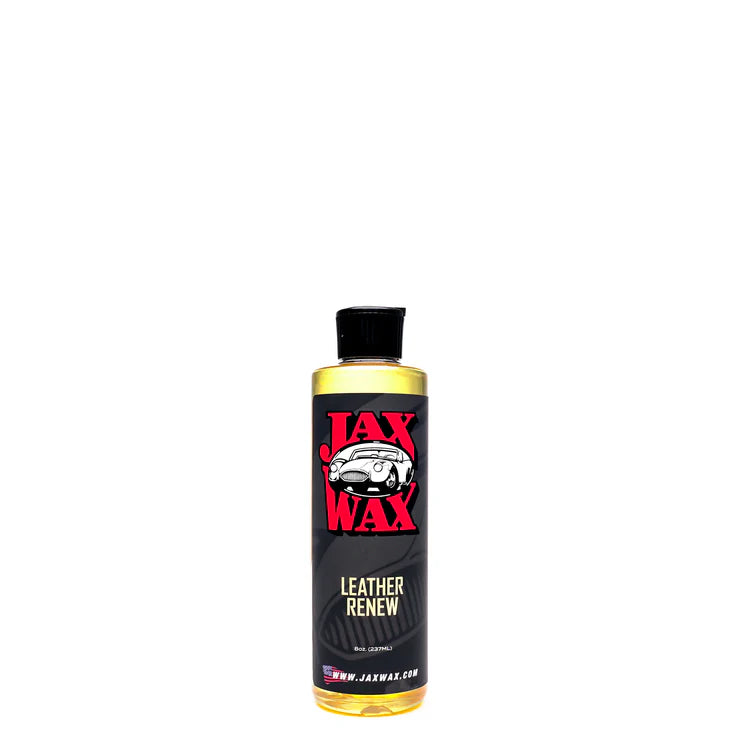
JAX WAX LEATHER RENEW
JAX WAX LEATHER RENEW
Couldn't load pickup availability
Leather is one of the most rewarding surfaces to care for — and one of the most unforgiving when neglected. Cracked, faded, dried-out leather is the result of years without proper conditioning, and once it cracks, restoration becomes far more difficult than prevention. Jax Wax Leather Renew is a deep-conditioning leather treatment that restores suppleness, color depth, and flexibility to dry, faded, or lightly cracked leather surfaces, bringing them back to life and protecting them from further deterioration.
At Chicago Jax Wax, we use Leather Renew on seats, steering wheels, door panels, and any leather surface that has lost its softness and richness. It penetrates deep into the leather fibers to replenish the natural oils that UV exposure and time strip away, leaving leather that feels soft, looks rich, and is far more resistant to future cracking and fading.
What It Does
- Deep conditioning — penetrates leather fibers to restore suppleness and flexibility from the inside out
- Restores color depth — brings back the rich, deep color of faded or dried leather
- Prevents cracking — replenishes natural oils that prevent the drying and cracking caused by UV and age
- UV protection — shields leather from the sun damage that accelerates fading and deterioration
- Safe on all leather types — works on automotive leather seats, steering wheels, door panels, and leather trim
How to Use
- Clean the leather surface thoroughly with Cap'n Jax Interior Cleaner and allow to dry completely
- Apply Leather Renew to a microfiber applicator sponge or soft cloth
- Work into the leather surface using circular motions, ensuring even coverage
- Allow to absorb for 5–10 minutes
- Buff off any excess with a clean, dry microfiber towel
- For severely dry or cracked leather, apply a second coat after the first has fully absorbed
Pro tip: Apply Leather Renew every 3–6 months as part of your regular interior maintenance routine. Leather that is conditioned regularly never reaches the point of cracking — prevention is dramatically easier and less expensive than restoration.
Share